
In 2024, Hurricane Helene severely damaged Interstate 40 on the Tennessee/North Carolina border, washing portions of the highway into the Pigeon River. This event disrupted a critical transportation link that previously carried 26,000 vehicles daily, severing a vital corridor between the two states in a rural area heavily reliant on this route. Now, the road is being rebuilt with enhanced resilience to withstand a 500-year flood, ensuring it can endure extreme weather events without needing future reconstruction.
Rebuilding Stronger After Hurricane Helene
The storm caused the river to rise dramatically, eroding the road’s foundation through a process called “scouring,” which led to sections of the highway collapsing into the river. To prevent future damage, engineers are constructing a wall made from 800,000 yards of roller-compacted concrete (RCC). This wall is designed in steps, ranging from 30 feet wide at the base to 10 feet wide at the top, where it seamlessly connects with the roadway surface. The RCC acts as a shield, deflecting floodwaters and protecting the road’s foundation from erosion.
Supporting the RCC wall is an interlocking pipe pile (IPP) system, consisting of 400,000 linear feet of 36-inch steel pipe driven into the ground. This outer barrier serves as the first line of defense against floodwaters, providing additional stability. Meanwhile, two lanes of the existing highway remain open to traffic, supported by a 290,000-square-foot soil-nail wall. This system uses giant steel nails driven into the hillside to keep the earth under tension, preventing landslides and maintaining the road’s integrity.
Read Also: Inflatable Steering Wheel Lets Drivers Feel Autonomous Intentions
Overcoming Logistical Challenges
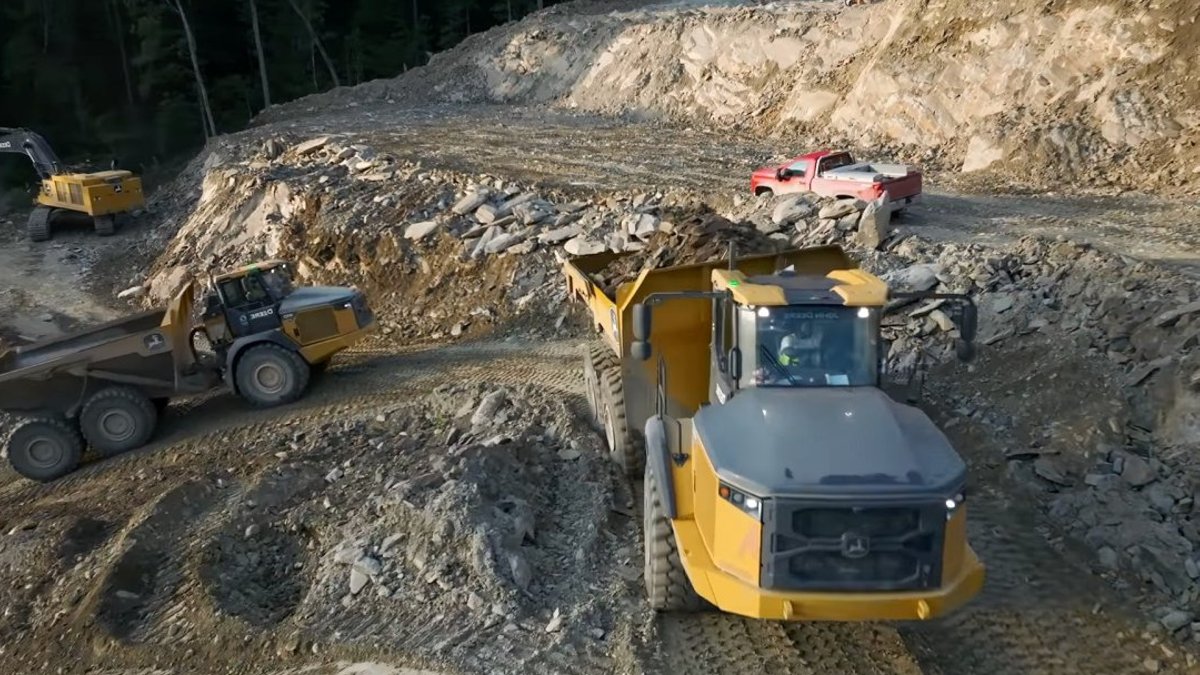
The project’s remote location in a gorge presented significant logistical hurdles, with no nearby quarries or infrastructure. To address this, the North Carolina state government approved the construction of a temporary quarry specifically for this project. Building this quarry, along with concrete-mixing plants and a haul road along the river, took a year to complete. All temporary infrastructure will be removed once the project is finished, minimizing environmental impact.
The RCC is transported in dump trucks and takes a roughly 25-minute ride to the site, unlike traditional concrete used in projects like swimming pools. Once on-site, it is poured into forms using a conveyor system and flattened with rollers, a process that earned it the name roller-compacted concrete. During the summer, this work is done at night to prevent the concrete from setting too quickly due to high temperatures. This yearlong effort aims to ensure the highway can withstand extreme weather, avoiding the need for future rebuilding.


