
The path toward fully self-driving vehicles remains distant, and until that milestone is achieved, driver-assist technologies that still require a vigilant operator will continue to dominate. Sharing control between people and machines can create uncertainty that may lead to serious incidents, prompting researchers at the University of Michigan to explore methods for reducing this danger. Their proposed answer, however, may appear unsettling to many.
Air-filled steering wheel
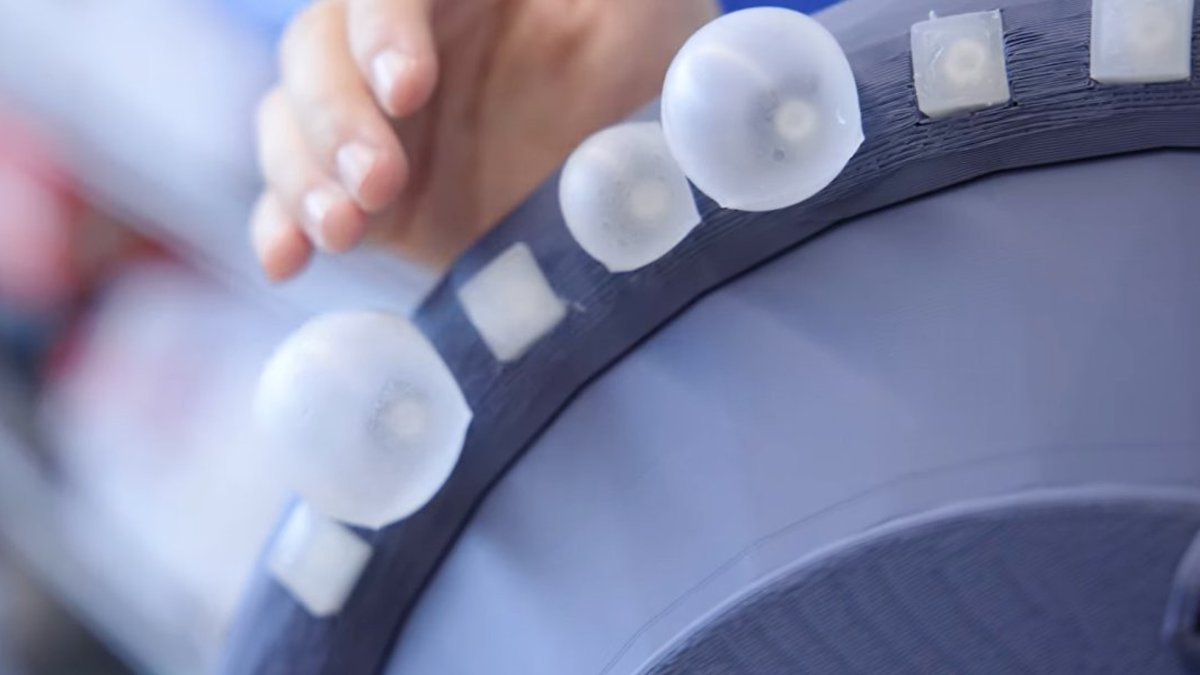
Engineers from the University of Michigan, in partnership with the Toyota Research Institute, have designed and evaluated a steering wheel equipped with inflatable air chambers. These chambers expand or contract to convey the intentions of a semi-autonomous driving system to the operator, while also allowing the driver to send feedback. The concept aims to prevent motorists from having to wrest control of the wheel, though the resulting “breathing” appearance can be disconcerting.
The team refers to the inflatable sections as “haptic zones,” positioned at roughly the 10-o’clock and 2-o’clock spots where drivers normally place their hands. Should the automated system intend to turn left, the chambers on the left side inflate. The driver can then press on them to collapse the air, indicating disagreement. If the system persists in its left-turn recommendation, it delivers a series of air pulses that the driver can feel.
Read Also: Volkswagen unveils button-heavy ID.Tiguan electric SUV
Bidirectional signaling
According to the researchers, this configuration outperforms conventional warning lights and audible alerts because it enables two-way communication. The motorist now has an option beyond simply allowing the system to act unchecked or intervening in a manner that might shut the system down—similar to how pressing the brake can deactivate many current assist features.
To evaluate this premise, participants were placed in a driving simulator and asked to negotiate a curve that could contain unforeseen obstacles. The study, as reported by the research group, found that subjects spent less time contending with the assist technology, applied the brakes less frequently, and expressed greater confidence in their handling. Drivers also noted “lower effort, frustration, and physical demand,” according to a University of Michigan press release. The investigators observed that participants were more inclined to restore trust in the system after it erred, though occasional over-reliance was also noted.


