
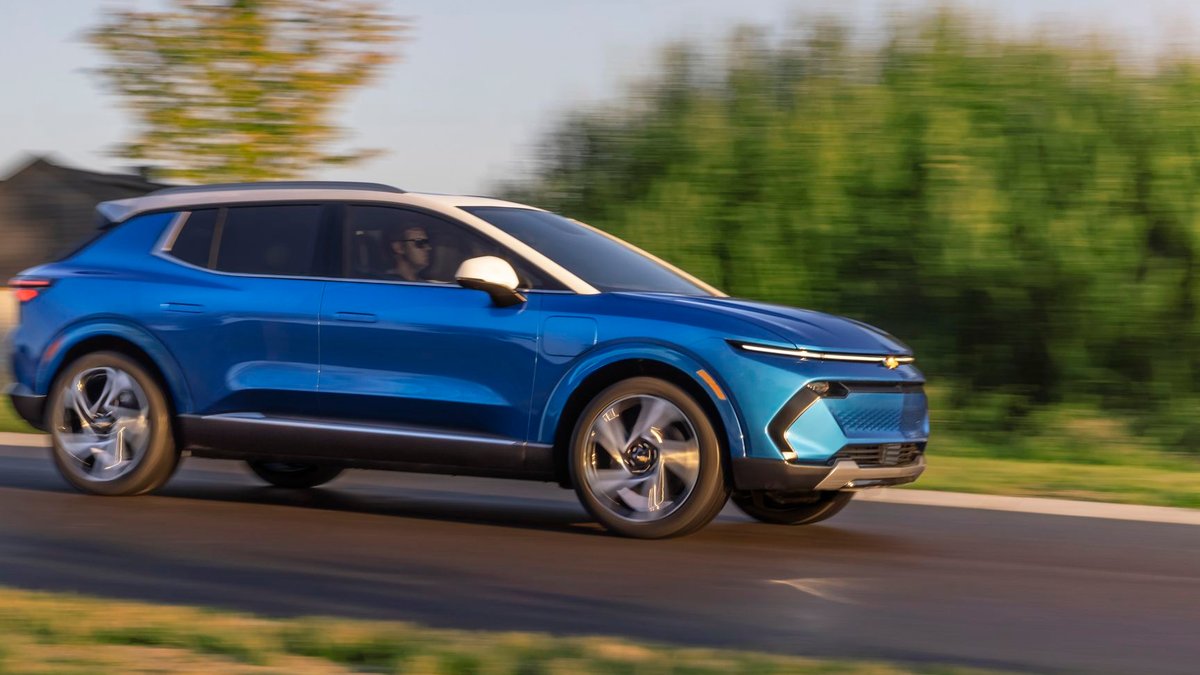
General Motors is accelerating development of the next-generation Chevrolet Equinox EV, aiming to bring the updated model to market in about two years—less than five years after the current version launched. This rapid turnaround reflects a deliberate strategy to refresh one of GM’s most critical electric nameplates while the original model is still in its early production cycle. The 2024 Equinox EV, which debuted as a 2024 model, has only been available for a matter of months, yet GM is already preparing its successor. This approach contrasts with traditional automotive product cycles, where vehicles typically undergo major updates every five to seven years. The compressed timeline suggests GM is treating the Equinox EV as a dynamic product rather than a static offering, allowing the company to respond more swiftly to evolving consumer preferences and technological advancements in the electric vehicle space.
New architecture, same flexibility
The upcoming Equinox EV will be the first vehicle built on GM’s latest BEV-N electric architecture, replacing the outgoing BEV3 platform. Like its predecessor, the new architecture will support rear-wheel, front-wheel, and all-wheel drive configurations, maintaining the versatility that underpins models like the Chevrolet Blazer EV and Cadillac Lyriq, Optiq, and Celestiq.
No official details on performance, range, or technology have been released. The only confirmed information is that the vehicle will debut as a 2029 model, a timeline that suggests GM is prioritizing the segment despite recent industry pullbacks.
Contrarian move in a cautious market
The decision to fast-track the Equinox EV comes as other automakers scale back electric vehicle plans. Ford recently canceled the F-150 Lightning, and Stellantis has shelved multiple battery-electric projects. Even GM is discontinuing the Chevrolet Bolt, which just won Car and Driver’s EV of the Year award. These moves reflect broader industry concerns about slowing EV adoption, high production costs, and uncertain demand.
Related: Off-road tire demand surges says Hankook
Yet GM’s commitment to the Equinox EV signals a different strategy. The move may reflect confidence in the compact SUV segment, where the current Equinox remains a strong seller in Canada despite a broader sales slowdown. In Canada, the Equinox has historically been one of GM’s best-selling models, and the electric version has maintained a loyal customer base even as overall EV demand has softened. The compact SUV segment is particularly important in Canada, where consumers prioritize all-weather capability, cargo space, and fuel efficiency—attributes that the Equinox EV is well-positioned to deliver. GM’s leadership in Canada’s electric vehicle market, where it holds the largest share of EV sales, further reinforces its decision to invest in the Equinox EV.
The automaker’s urgency could also stem from competitive pressure. With Tesla and Chinese manufacturers expanding their lineups, GM may be racing to secure its foothold before new rivals gain traction. The BEV-N platform’s flexibility could allow GM to adapt quickly to shifting demand, whether for performance-oriented models or more affordable variants.
Still, the lack of concrete details leaves questions unanswered. Pricing, charging capabilities, and software features—all critical factors for EV buyers—remain unknown. The 2029 timeline also means the current Equinox EV will have a relatively short production run, raising concerns about long-term support for early adopters.
For now, the announcement serves as a counterpoint to the narrative that legacy automakers are abandoning electric vehicles. Whether GM’s bet pays off may depend on how quickly it can deliver a compelling product in an increasingly crowded market.


