
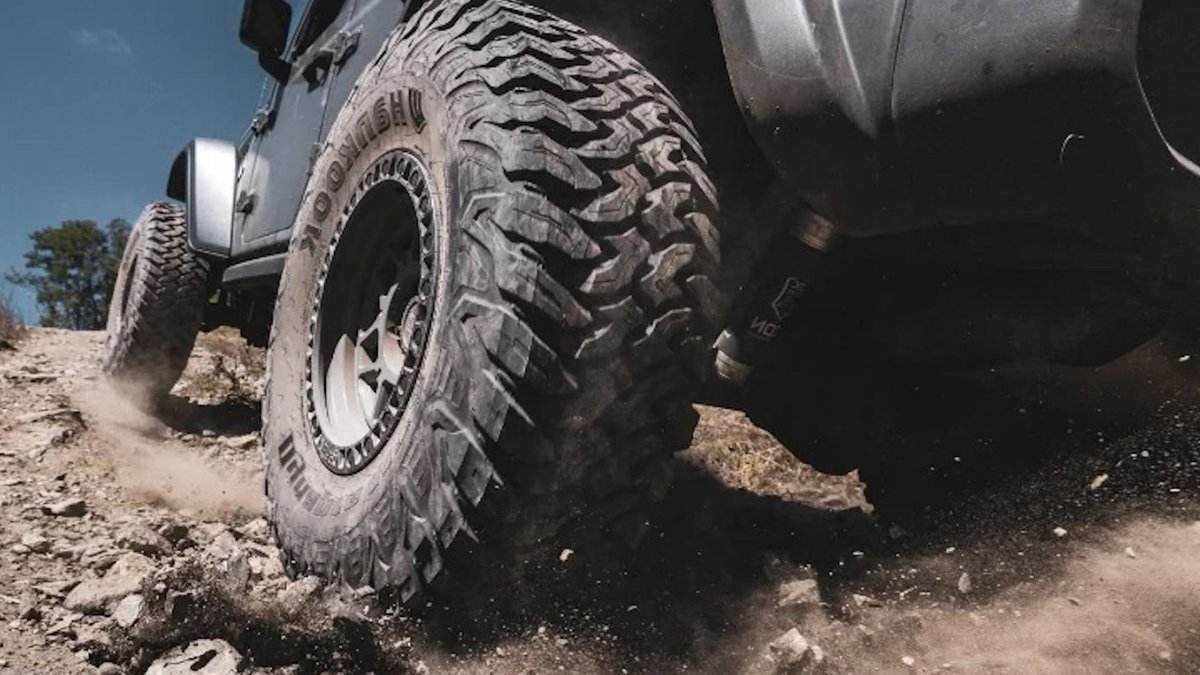
The share of Americans interested in off-road driving has nearly doubled in a year, according to data released by Hankook Tire.
In the company’s annual Gauge Index survey, 64% of respondents said they were drawn to all-terrain or off-road adventures, up from 34% in the same poll a year earlier. The jump suggests a shift in consumer preferences, though Hankook’s sample is limited to its own customer base.
SUVs outpace pickup trucks among off-road enthusiasts
The survey also found that SUVs are the preferred vehicle for off-road trips, beating out pickup trucks. That preference aligns with broader market trends, where SUV sales have consistently outpaced those of traditional trucks in recent years.
Related: Cadillac Optiq Sport Gets Road Test
Some of the interest may be more about aesthetics than actual trail use. The survey’s author noted seeing vehicles like a stock Sprinter van fitted with aggressive BFGoodrich KO2 tires—likely chosen for looks rather than function. Still, the data points to a growing appetite for off-road experiences, whether real or aspirational.
Overlanding and off-roading have become lucrative niches, with events like Overland Expo West in Arizona drawing larger crowds each year. Even mainstream brands have tapped into the trend, partnering with companies like GoPro to promote outdoor adventures.
This isn’t the first time a sudden surge in outdoor activity has followed a period of restricted movement. During the COVID-19 pandemic, many turned to solo or small-group camping as a way to escape lockdowns. The isolation of overlanding—whether in a camper or a rugged SUV—offered a way to travel while minimizing contact with others. That period may have planted the seed for today’s broader interest.
Off-road gear has also become more accessible, both in terms of availability and price. Entry-level all-terrain tires, recovery boards, and roof racks are now easier to find, lowering the barrier for newcomers. The combination of affordability and cultural momentum could explain why the trend shows no signs of slowing.
Related: Canadian first-time buyer becomes Ohio dealer principal
Hankook’s findings align with industry shifts
The survey’s results mirror broader changes in the automotive market. Automakers have responded by expanding their off-road-focused lineups, with even luxury brands introducing rugged variants of their SUVs. Ford’s Bronco and Jeep’s Wrangler remain strong sellers, but newer entries like the Hyundai Santa Cruz and Volkswagen Taos have also added off-road trims to appeal to this growing segment.
Still, the data comes from a single company’s survey, and its methodology isn’t publicly detailed. The sample size, demographics, and geographic distribution of respondents could skew the results. What’s clear, though, is that the conversation around off-roading has expanded beyond hardcore enthusiasts.
For now, the trend appears to be more than a passing fad. Whether that translates to more people actually leaving the pavement—or just buying the gear to look the part—remains to be seen.


