
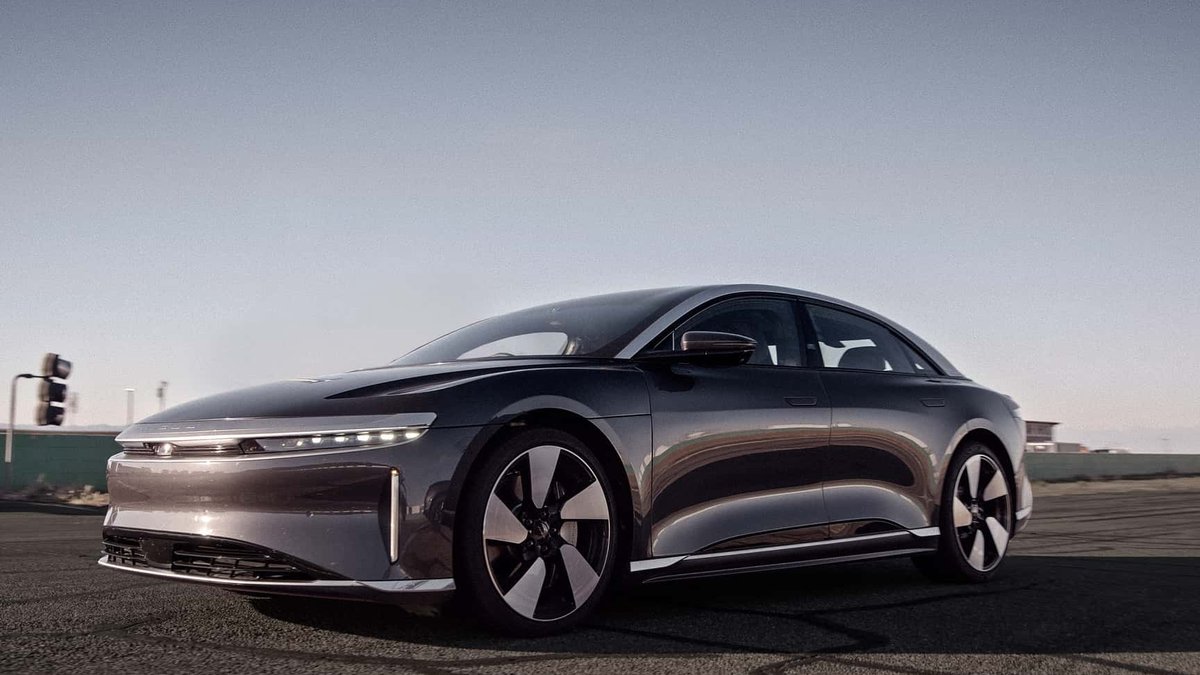
Lucid is recalling more than 27,000 of its Air electric sedans over a potential fire risk tied to an improperly protected wiring circuit. The automaker has told owners to park affected vehicles away from structures until a software fix can be applied.
The scope of the recall
The recall affects approximately 27,185 Lucid Air sedans built between 2022 and 2026, according to a filing with the National Highway Traffic Safety Administration. That makes it the company’s largest recall to date. For context, Lucid sold just 15,841 vehicles total last year.
The problem centers on the car’s low-voltage electrical system, not the high-voltage traction battery. Most vehicles use traditional fuses that physically “pop” when a circuit draws too much current. Lucid instead relies on a software-controlled eFuse to detect and protect against overcurrent events.
Under normal circumstances, the eFuse should shut down a circuit that exceeds safe current levels. However, the filing notes that the circuit could remain energized without proper protection, potentially leading to overheating. In the worst cases, that could mean melting components, smoke, or a fire.
The low-voltage system in the Lucid Air powers essential comfort and convenience features, including the cabin climate controls, lighting, infotainment system, and various electronic modules that manage everything from window operation to seat adjustment. While this system operates at significantly lower voltage than the propulsion battery, it still carries enough electrical current to generate heat if a fault occurs. The eFuse technology Lucid employs represents a departure from conventional automotive electrical architecture, using software algorithms to monitor current flow and respond to anomalies faster than traditional thermal fuse elements can react.
Software update already deployed
Lucid says the fix requires only an over-the-air software update. The company has already pushed the update to a significant portion of affected vehicles. According to the filing, more than 20,700 of the 27,185 recalled cars—roughly three-quarters—already have the corrected software installed.
Related: VW turns ID Buzz into US electric camper
Owners of remaining vehicles will receive notification through standard recall procedures. Until the update is applied, Lucid is advising owners to park their cars outdoors and away from buildings or other vehicles.
Over-the-air updates allow Lucid to address certain issues without requiring owners to visit a service center, representing a key advantage of the company’s electrical architecture. The update recalibrates the eFuse logic to ensure proper overcurrent protection across all affected circuits. For owners who have not yet received the update, the temporary parking recommendation reflects a precautionary approach, minimizing potential damage should an electrical fault occur while the vehicle sits unattended.
Fourth recall for the Air this year
This is the fourth recall for the Lucid Air in 2024 alone. In May, the company recalled 2,039 vehicles for faulty drive unit inverters. A March recall covered 3,627 cars with improperly secured half-shaft bolts that could disconnect from the drive unit. The largest previous recall came in January, when 10,816 Airs were called in for a rearview camera that might not display properly.
Combined with today’s announcement, the Air has now been subject to recalls affecting more than 43,000 vehicles this year—far exceeding the model’s total sales over that period.
The drive unit inverter recall addressed a component responsible for converting direct current from the battery into alternating current for the electric motors. The half-shaft bolt issue affected the mechanical connection between the drivetrain and wheels, potentially compromising vehicle stability if bolts loosened. The rearview camera matter involved a software calibration problem that could prevent the display from showing the required field of view when the vehicle is in reverse. Each of these recalls targeted different mechanical and electronic subsystems, illustrating the complexity of integrating numerous advanced technologies in a relatively new vehicle platform.
Owners can check whether their vehicle is included by entering their VIN on the NHTSA website. The recall is designated as campaign number 24V-XXX.


