
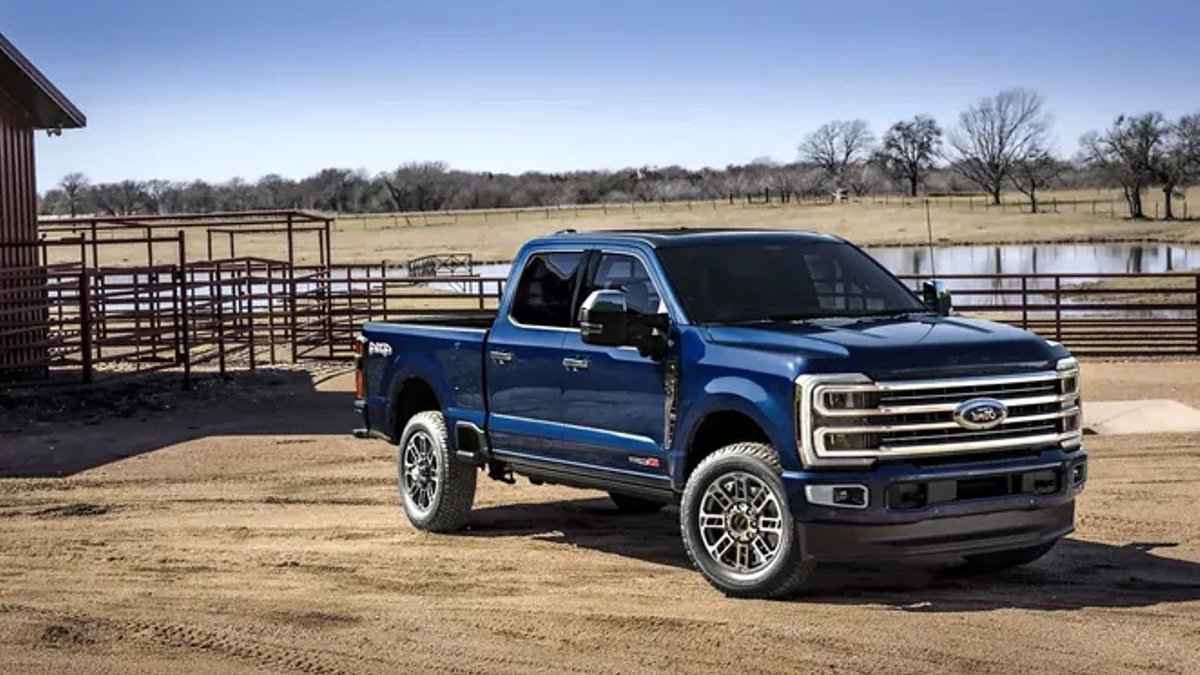
Ford Motor Co. and Canada’s Unifor labor union reached a three-year collective agreement that secures wage increases, job protections, and a plan to manufacture Super Duty trucks at the Oakville Assembly Plant.
The contract, approved by 74% of Ford’s unionized workers, covers employees at the Oakville complex and the Windsor and Essex Engine Plants. It begins Sept. 21, 2026, and expires Sept. 19, 2029.
Investments and job guarantees
The agreement allocates $400 million for Oakville to support Super Duty truck production, separate from a $3 billion investment previously announced for the facility. That earlier funding aimed to retool the plant for electric vehicles before the automaker changed direction to focus on heavy-duty pickups.
In Windsor, Ford will invest $500 million and intends to introduce a third shift at the Essex Engine Plant by 2029. The union’s report also outlines a no-closure guarantee and production commitments at all Ford locations in Canada.
John D’Agnolo, Ford Master Bargaining Chairperson, stated the deal strengthens the position of union members. “With multi-hundred-million dollar investments in our facilities and a plan to return every laid off member in Oakville to work, this agreement means our members at Ford are in a solid position now and over the next three years.”
Wages and benefits
Skilled trades workers will earn CA$62.71 per hour by the end of the contract, while full-rate production workers will reach CA$50.20 per hour. Those rates are about 35% higher than what Ford pays U.S. workers in similar roles.
Related: First-time Canadian Buyer Becomes Dealer Principal in Ohio
The contract includes 3% annual wage increases, cost-of-living adjustments, and a new Productivity and Quality bonus. It also increases retiree healthcare payments and establishes a process for laid-off Oakville workers to return to their jobs.
Unifor National President Lana Payne described the agreement as a response to skeptics. “There are many who counted us out, who wrote our industry, our autoworkers, and our union off,” she said. “This contract shows we refuse to be counted out.”
The ratification arrives as Canada’s auto sector handles trade policy uncertainty. The U.S. is reviewing the United States–Mexico–Canada Agreement, and previous discussions about tariffs raised concerns about supply chain disruptions. For now, the Ford deal provides stability, though it may influence upcoming negotiations with General Motors and Stellantis, both of which employ unionized workers in Canada. Non-union automakers like Toyota and Honda operate in the country without such agreements.
Oakville’s shift to Super Duty production represents a change from earlier plans to build a three-row electric SUV there. The company has noted the plant remains flexible for future electrified vehicles, but current priorities focus on meeting demand for heavy-duty trucks.
The automaker started assembling Super Duty models at Oakville earlier this year, expanding beyond its U.S. plants. This move supports Ford’s strategy to diversify manufacturing locations, though the long-term product mix at the facility remains uncertain as industry trends continue to shift.
Such transitions highlight how quickly priorities can change in automotive manufacturing. A similar story unfolded when a first-time buyer became a dealer principal in Ohio after entering the industry with no prior experience.


