
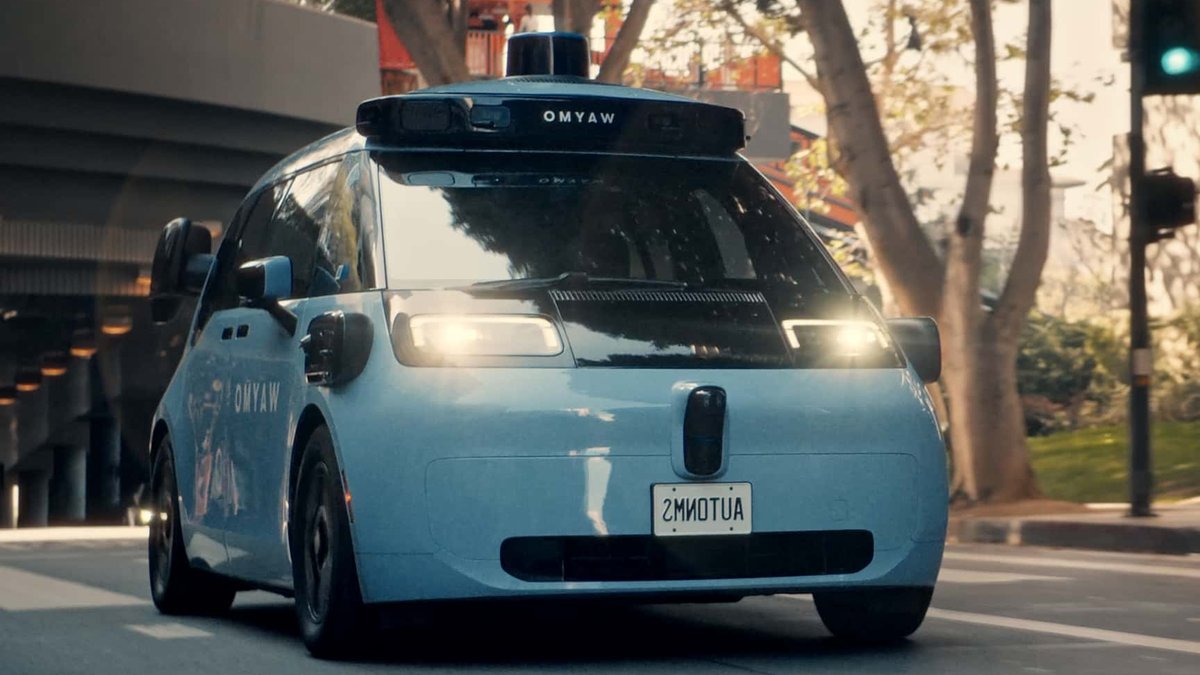
Waymo has begun offering paid rides in its new Ojai autonomous minivans across three U.S. cities, marking the first time the company’s latest electric robotaxis are available to the public.
The vehicles, built by Chinese automaker Zeekr, are now operating in San Francisco, Los Angeles, and Phoenix. Riders requesting a Waymo may be matched with an Ojai or the company’s older Jaguar I-Pace models, depending on availability.
Larger, cheaper, and built for families
The Ojai minivans seat up to four passengers and feature sliding doors, a design choice aimed at making them more practical for groups and families. Waymo’s older Jaguar I-Pace fleet, which has become a common sight in San Francisco, seats fewer passengers and lacks the same accessibility features.
Cost played a role in the switch. The Ojai vehicles are significantly cheaper to manufacture and operate than the Jaguar models, despite facing higher import tariffs. They arrive in the U.S. without connected car technology, which Waymo later installs at its Arizona factory.
Related: Genesis GV90 arrives as rolling luxury lounge
The minivans are equipped with Waymo’s sixth-generation self-driving system, including 13 cameras, four lidars, and six radars. The software has also been updated to better handle challenging weather conditions like snow and fog.
For now, the Ojai fleet is small—around 300 vehicles, according to a Waymo spokesperson. But the company plans to expand rapidly. Later this year, the minivans will begin serving select riders in Denver, Las Vegas, and San Diego. By the end of 2026, Waymo expects to have thousands of Ojai robotaxis on U.S. roads.
This rollout isn’t just about volume. The Ojai represents a shift in strategy, prioritizing purpose-built vehicles over retrofitted luxury cars. That could make robotaxis more accessible, though it remains to be seen whether passengers will notice the difference—or care.
A competitive edge in a crowded market
Waymo remains the dominant player in the U.S. robotaxi industry, but competition is intensifying. Tesla has been testing its own autonomous ride-hailing service, while Amazon’s Zoox recently received federal approval to operate its steering wheel-free robotaxis for paid rides.
Related: New Car Creeper Prioritizes User Safety
The Ojai’s lower production costs could give Waymo an advantage as it scales. The company has already logged millions of autonomous miles, and its software improvements suggest a focus on reliability over flashy features. That might matter more to riders than the type of vehicle showing up at the curb.
Still, the robotaxi market is far from settled. Regulatory hurdles, public skepticism, and technical challenges remain. Waymo’s expansion plans depend on more than just new hardware—they require trust, and that’s something no amount of lidars or cameras can guarantee.
For now, the Ojai is just another option in Waymo’s fleet. But if the company’s projections hold, it won’t be long before these minivans become a familiar sight on city streets.


