
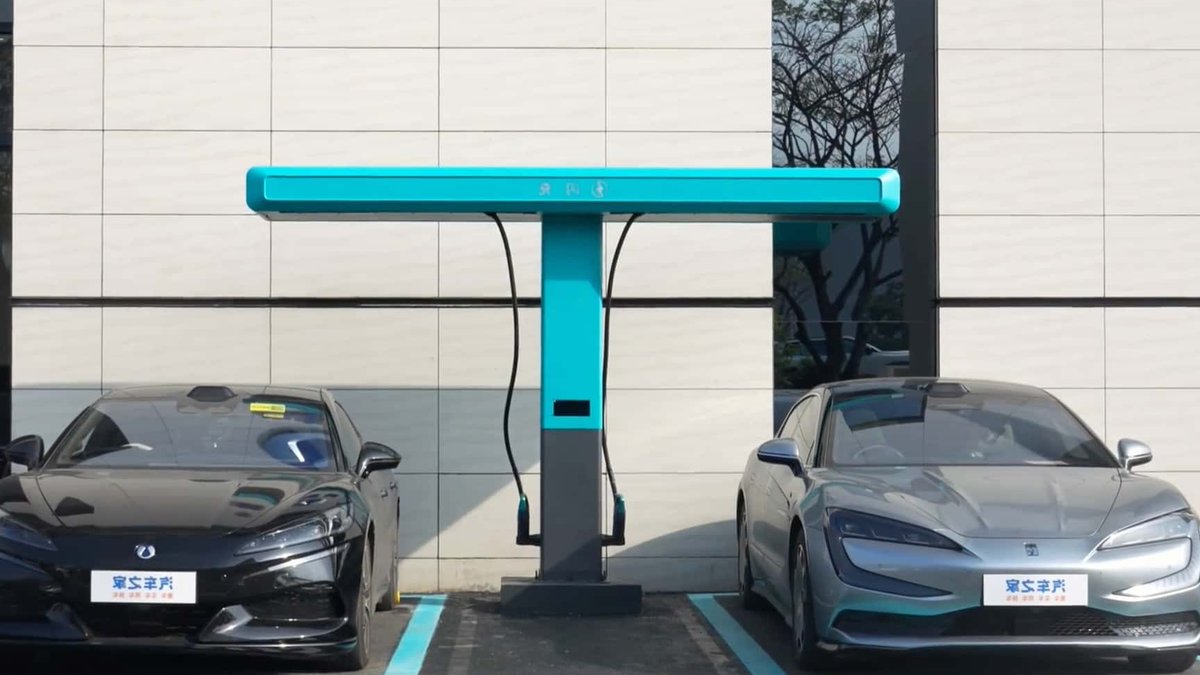
In a push that puts the BYD Flash Charging network ahead of rivals, the Chinese automaker announced the opening of its 10,000th 1.5‑megawatt ultra‑fast charger, a milestone reached in just five months.
Network hits 10,000 sites in five months
Earlier this year the company celebrated its 5,000th unit, and by April it had already doubled that count. The expansion now spans more than 300 cities, making the system the largest self‑built set of high‑speed chargers in the country. Official figures show the rollout averages about 34 new stations per day since April.
To meet the next goal—20,000 installations by the close of 2026—the daily pace would need to climb to at least 80. That jump would require a sizable increase in logistics, labor and supply chain coordination, especially as winter approaches in many regions.
Related: BMW Sells 2 Million Electric Vehicles
Technical specs set the chargers apart
Each unit can push up to 1.5‑megawatt of power through a single cable, more than three times the capacity of typical 350‑kilowatt fast chargers found in the United States. On‑site battery storage acts as a buffer, easing the load on the grid while delivering the high burst of electricity.
The design incorporates a T‑shaped frame with rails and sliding cables, a layout the company says keeps the plug from touching the ground and improves maneuverability. This engineering choice also shortens the time needed for a vehicle to line up under the device.
When paired with the latest Blade 2.0 battery, the system can lift a charge from 10 % to 97 % in roughly 9‑minute bursts. A recent endurance test saw a Yangwang U7 battery refilled 350 times over nine days, covering 30,000 km without obvious degradation, suggesting the high‑power approach may not harm battery health as some skeptics feared.
Looking ahead, the rapid expansion could reshape how drivers refuel their cars. If the company sustains its accelerated schedule, the dense coverage might encourage broader adoption of electric vehicles, especially in regions where charging time remains a barrier. However, scaling up so quickly also raises questions about grid stability and the long‑term durability of the storage units.
Related: Upcoming Driving Games Coming in 2026
During its first half‑year of operation, the network delivered about 210 GW of electricity to 1.83 million drivers. Notably, 33 % of those users were owners of non‑company models, indicating that the stations are already serving a mixed fleet.
Ambitious target for 2026 and beyond
The roadmap calls for another 10,000 installations before the end of 2026. Achieving that would mean maintaining the higher daily deployment rate for the remaining 125 days of the year. While the current momentum suggests the goal is within reach, any slowdown in component supply could force a recalibration.
Beyond domestic growth, the firm has hinted at extending the technology to Europe and Canada, where emerging EVs are beginning to support megawatt‑level charging. Such moves could boost the utilization rate of the existing facilities, especially as more models become compatible.


