
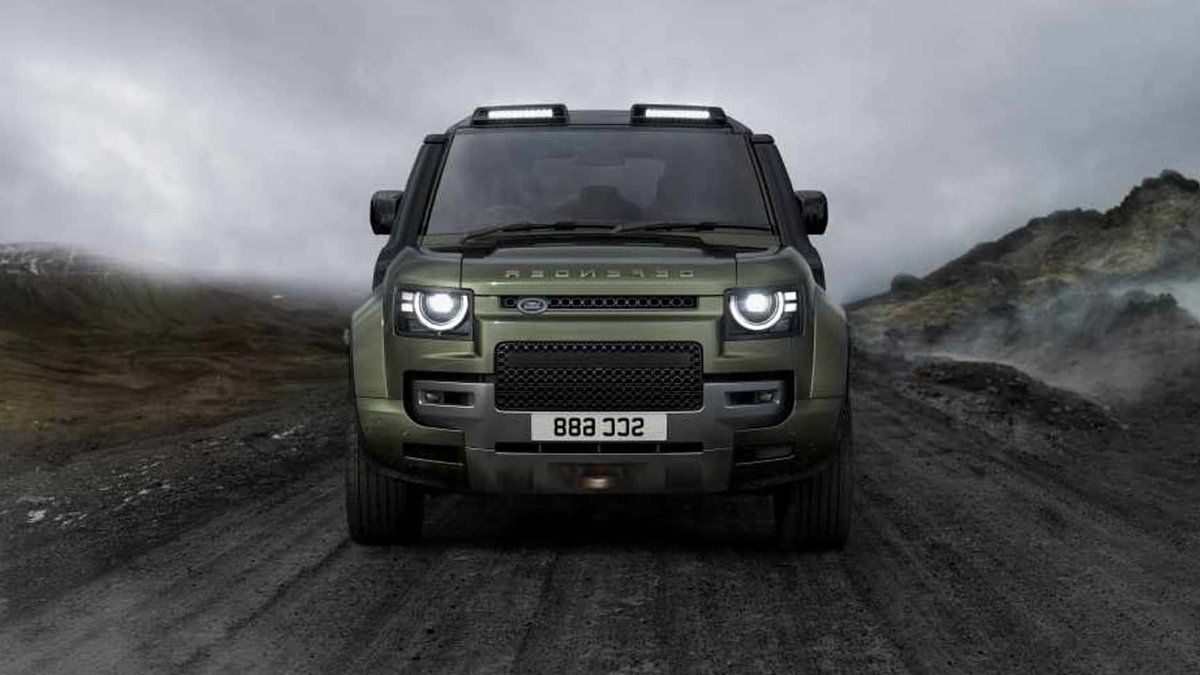
The next-generation Land Rover Defender will not arrive until the early 2030s, marking a two-year delay from earlier plans. Jaguar Land Rover is postponing the electric version of its best-selling SUV while monitoring how the EV market develops.
The decision follows a decline in sales across key markets. In the first quarter of fiscal 2027—April through June 2026—global sales fell 9.2% to 79,300 vehicles. The Defender, Range Rover, and Range Rover Sport made up 81% of that total, showing how vital these models are to the company’s revenue.
The current Defender is only offered with combustion engines. A full redesign was supposed to introduce an electric version, but that transition has been paused. The automaker faces several obstacles, including tariffs from previous U.S. policies, reduced demand in America, and strong competition from Chinese brands in China.
This year, a cyberattack forced a five-week production halt, adding to existing difficulties. The disruption further complicated an already challenging period for the company.
The electric Defender will use JLR’s dedicated EV platform, the Electrified Modular Architecture (EMA). The same architecture will support the upcoming Range Rover GT, which was revealed during a press event in England this summer. Benefits include an 800-volt electrical system and more frequent software updates.
For U.S. buyers, the next Defender may differ in design. The American version is being developed with Stellantis to help JLR avoid some tariffs that currently increase costs by 10% to 15% for vehicles imported from Europe. The partnership might also change the vehicle’s segment, though specifics remain uncertain.
Two potential approaches have been discussed for the Stellantis collaboration: a body-on-frame platform like the one used for the Jeep Wrangler, or Stellantis’ STLA Large EV platform, which already underpins models such as the Jeep Recon. Neither option has been confirmed, and both remain speculative.
Related: Top Coupes Since 1999 Impress Enthusiasts
JLR has delayed other electric projects as well. The Range Rover Electric, announced in 2021 with an expected 2024 launch, has been postponed by over two years. The company continues to advance other EVs, including the Range Rover Sport Electric and the Jaguar Type 01, but timelines for all have been extended.
The delay signals how much the market has shifted. Two years ago, automakers rushed to electrify their lineups. Now, many are pausing to assess whether demand will align with their goals. For JLR, that means waiting to see if its two largest markets—the U.S. and China—will stabilize before fully committing to an electric transition.
The EMA platform is designed for flexibility, supporting both fully electric and hybrid versions of JLR’s SUVs. That adaptability could prove useful if the company chooses to offer a mix of powertrains. For now, though, the Defender’s electric future remains uncertain.
The Range Rover GT, which shares the platform, was displayed to journalists in July. Its design hints at what the electric Defender might eventually look like, featuring improved packaging, more advanced software, and a more efficient electrical system. Market readiness will determine whether these changes matter.
The decision to delay reflects a wider trend in the auto industry. Even well-known models are affected by tariffs, changing demand, and competition. The Defender will continue as a combustion-powered SUV for the foreseeable future.
Enthusiasts interested in efficient luxury models can explore how the Mercedes CLA exceeds expectations in fuel economy.


