
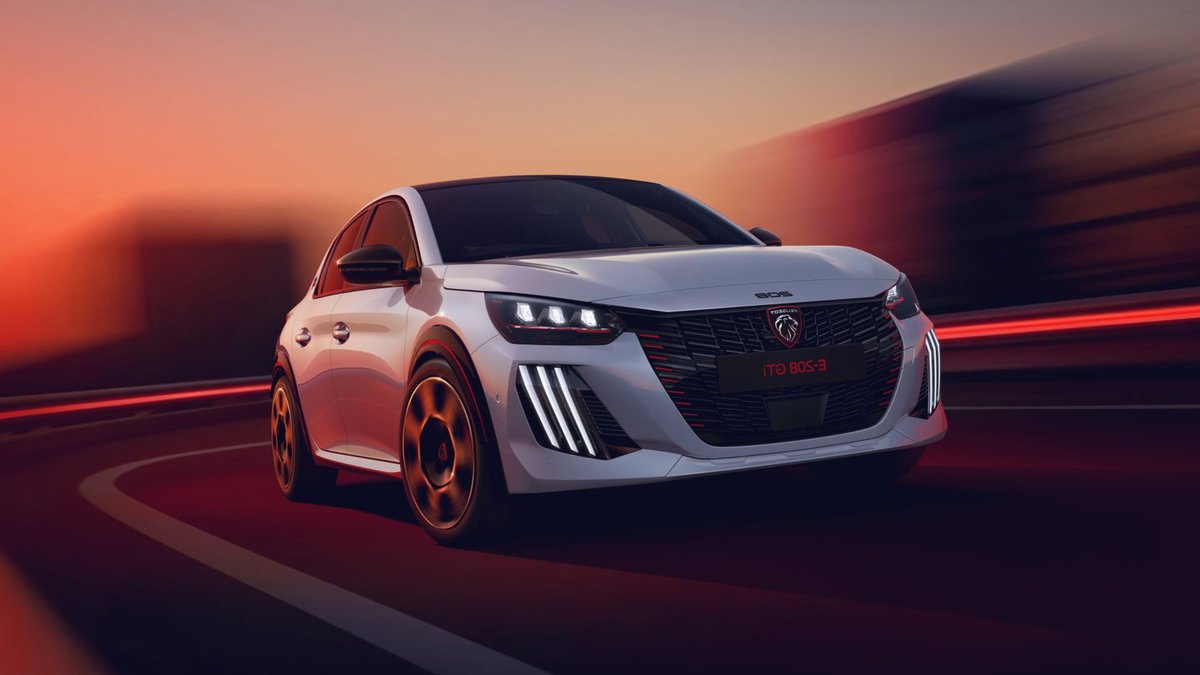
The concept of a hot hatch was built on the idea that you didn’t need a lot of money to have a lot of fun. You’d take an ordinary family hatchback, give it a more powerful engine, tighten up the suspension, add bigger wheels and a spoiler, and you’d have a performance car that normal people could afford.
The formula worked well for decades, but the hot hatch market in 2026 is quite different. The Volkswagen Golf GTI, once considered the “people’s supercar,” now starts at £41,860, and that’s before adding any optional features.
There’s nothing wrong with the latest Golf GTI. It’s faster, safer, and more sophisticated than its predecessors, with a 2.0-litre turbo engine producing 261bhp. However, the price tag is an extraordinary amount of money for what was traditionally an attainable performance car.
If you look at other hot hatches, the prices are even more dramatic. The Toyota GR Yaris starts at £46,195, and the latest generation of smaller electric hot hatches, such as the Peugeot E-208 GTi, costs £34,995.
It wasn’t that long ago that hot hatches were affordable. The Ford Fiesta ST, launched in 2018, started at £18,995, with a 197bhp turbocharged engine and a six-speed manual gearbox. The Peugeot 208 GTi, launched in 2013, cost £18,895.
In contrast, the prices of today’s hot hatches are much higher. The difference between the old and new prices is hard to ignore, even accounting for inflation.
The Fiesta ST is gone because the Fiesta itself is no longer in production. There’s no more Renaultsport Clio, no new Hyundai i20 N, and no combustion-engined Peugeot GTi. The Honda Civic Type R is also disappearing from the UK and European market.
Part of the problem is that building a cheap performance car is no longer cheap. Modern cars require sophisticated emissions equipment, safety systems, and infotainment, which increases the cost. Manufacturers then have to spend more money engineering a performance derivative, which sells in smaller numbers than the normal car it’s based on.
Related: Cadillac Optiq Sport Gets Road Test
This is particularly difficult at the small end of the market, where profit margins are already thin. If manufacturers are struggling to make money selling ordinary superminis, it’s harder to convince them to develop a bespoke performance version.
Electrification is also a factor, as manufacturers are pouring money into EV development and meeting emissions legislation. An old-fashioned petrol hot hatch starts to look like an expensive distraction.
There is a new generation of electric hot hatches emerging, such as the Alpine A290, MINI John Cooper Works Electric, and Peugeot E-208 GTi. These cars are proof that carmakers haven’t given up on making small cars fun.
Perhaps the used market is where the traditional hot-hatch buyer has been pushed. For the price of a new Golf GTI, you can find previous-generation Civic Type Rs and GR Yarises on the used market. If you’re willing to spend around £15,000 to £20,000, there are Fiesta STs, Hyundai i20 Ns, and Peugeot 208 GTis available.
The demand for fast, practical small cars is still there, as shown by the Golf GTI, GR Yaris, and new electric performance hatchbacks. What’s being lost is the affordability aspect of the hot hatch formula. A hot hatch was once the performance car you bought because you couldn’t afford a sports car; now, you need sports-car money to buy a hot hatch.
They are looking for alternatives.
Carmakers are investing in rotary engines for their performance models.


