
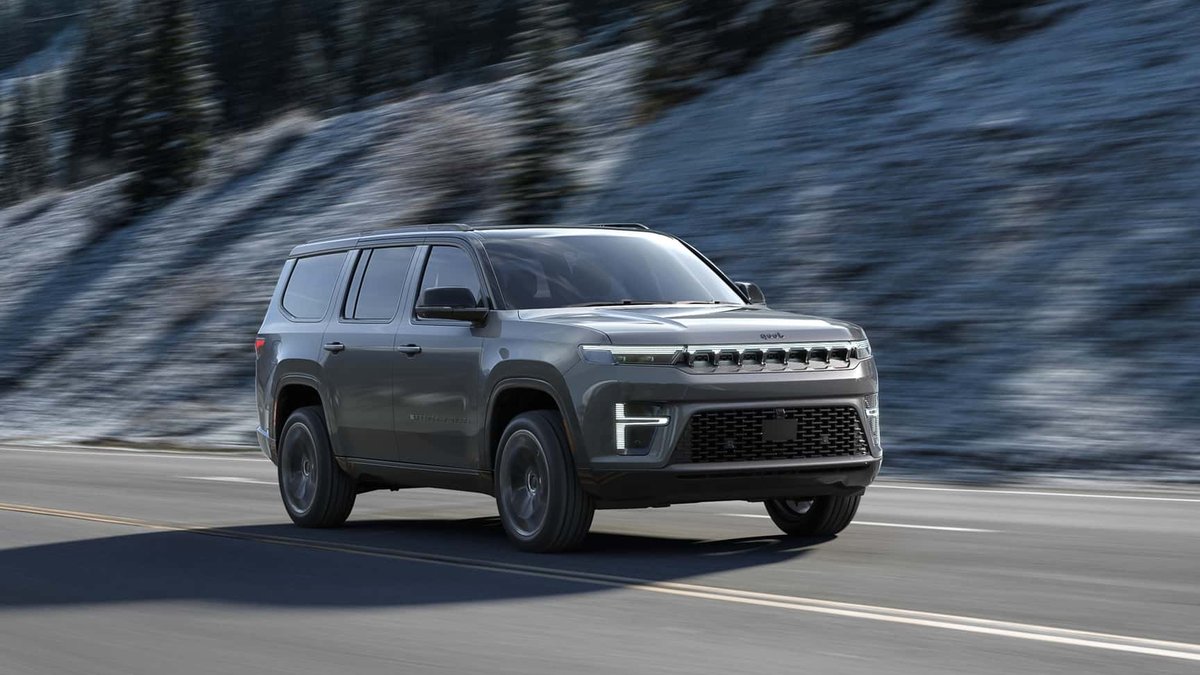
Stellantis has pushed back the launch of the Jeep Wagoneer extended-range electric vehicle by six months, according to a report from Automotive News.
Updated Schedule
The automaker informed suppliers that production of the Wagoneer EREV will now begin in November, replacing the previous May target. Stellantis spokespersons maintain that the broader EREV strategy remains on track for 2026 and 2027. This timeline aligns with the company’s earlier announcements regarding its electrified large SUV and truck lineup.
The delay affects the powertrain development rather than the vehicle’s final assembly. Supplier executives cited internal memos indicating that the push allows for a smoother rollout of the new technology. This decision follows a history of missed deadlines for Stellantis’ large electrified models, including the full EV version of the Ram 1500, which was canceled in favor of the EREV option last year. The Ram 1500 REV itself was originally scheduled to launch in mid-2026 but has now been pushed back to April of next year, highlighting a broader trend of postponement across the brand’s electrification efforts.
Related: Battery Factory Powers Electric Vehicle Boom
Powertrain Details
Both the Jeep Wagoneer EREV and the Ram 1500 REV will utilize a shared powertrain architecture. The system pairs a standard 400-volt battery with electric motors to handle propulsion. A V6 engine functions as a generator, charging the battery and powering the electric drive unit rather than driving the wheels directly. This setup is designed to extend driving range, particularly during towing or when the battery depletes.
The EREV concept has gained traction internationally, particularly in China, where it is frequently used in large luxury SUVs. American manufacturers are now adopting similar approaches to address range anxiety. Ford’s F-150 Lightning will return as an EREV, and Scout is launching its Traveler and Terra models with a majority of reservations placed for the EREV variants. This shift suggests that automakers are prioritizing the extended range capabilities of the technology over fully battery-electric options for certain market segments.
Automotive News reported that the powertrain delay is a calculated risk to ensure the complex system works reliably before hitting the assembly line. The decision to delay the launch by six months provides the engineering team with additional time to finalize the integration of the generator and battery systems. The goal is to ensure that the gas engine, which is not mechanically connected to the wheels, can efficiently provide electricity to the electric motors when the battery is depleted.


