
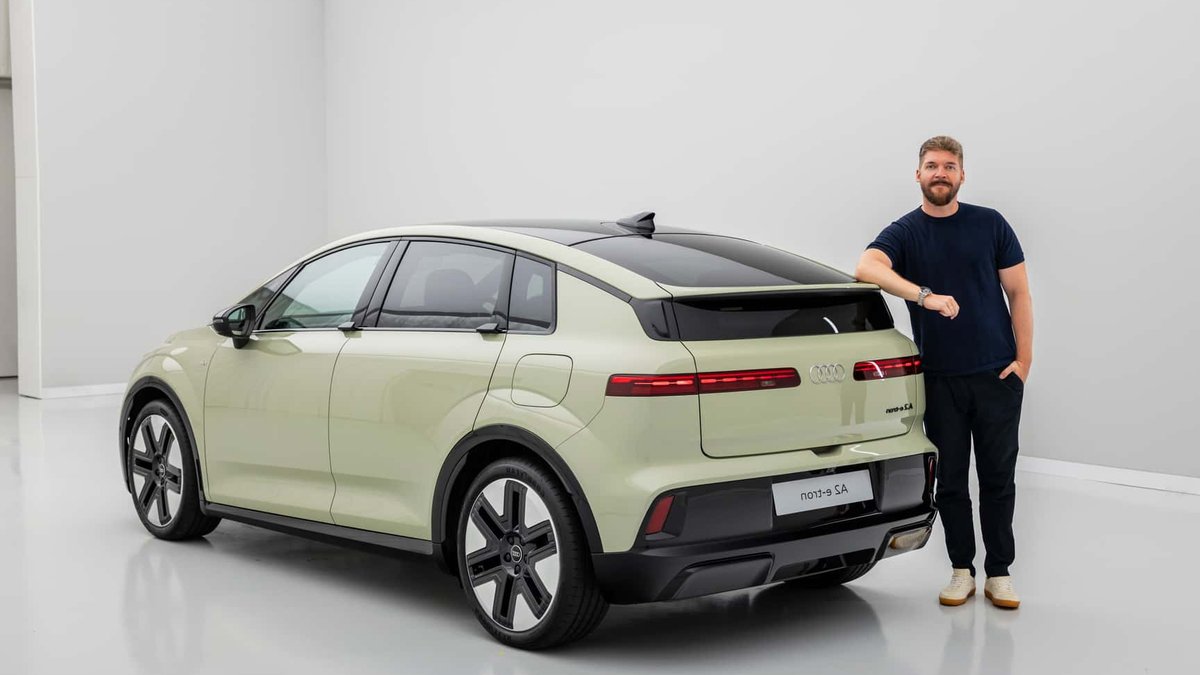
Audi plans to launch the A2 e‑tron at the end of 2026 as its lowest‑priced electric model, built in Ingolstadt. The German market will see orders open in the fall, with first deliveries slated for December. Pricing starts at €38,200 (about $44,400).
Compact dimensions, roomy cabin
Measuring 170.1 inches (4.32 m) in length, the A2 e‑tron fits squarely in the compact segment. Its 108.8‑inch (2,764 mm) wheelbase matches that of the larger Q4 e‑tron, creating more legroom despite the modest exterior.
The car’s drag coefficient of 0.24 comes from front air curtains, wheel‑arch gap reducers and an active cooling intake that stays closed unless cooling is needed. A flat underbody adds to the low resistance.
Inside, the front seats offer generous space, while the rear bench accommodates a tall passenger without compromising headroom, even with the optional 17.2‑square‑foot glass roof. Cargo capacity ranges from 14.0 to 47.2 cubic feet, enough for three large suitcases when the floor is lowered.
A small front trunk, or frunk, provides 0.5 cubic feet for charging cables or other items.
Powertrain choices and driving range
The A2 e‑tron sits on Variant 1 of the MEB platform, shared with the ID.3 Neo and Cupra Born. All models are rear‑wheel drive; no all‑wheel‑drive version is planned.
Four motor outputs are offered: 168 hp, 188 hp, 228 hp and 322 hp. The top‑end version accelerates from 0‑62 mph in 5.7 seconds and tops out at 124 mph.
Battery options include 52 kWh and 61 kWh packs built with lithium‑iron‑phosphate cells, plus an 84 kWh nickel‑manganese‑cobalt pack for the higher‑output models. The smallest battery yields a WLTP range of about 263 miles, while the 84 kWh version reaches up to 401 miles (646 km).
Charging speeds vary: the 84 kWh models accept up to 183 kW DC, reaching 80 % in roughly 29 minutes. The 188‑hp version tops out at 105 kW, and the base model at 100 kW. Audi notes that the LFP chemistry allows a relatively broad state‑of‑charge window for fast charging.
Bidirectional charging is standard. Vehicle‑to‑load (V2L) can supply up to 3.6 kW to external devices via a 230‑volt outlet, while vehicle‑to‑home (V2H) will be available in select European markets, turning the car into a backup power source.
The combination of a modest battery and efficient aerodynamics means the 188‑hp model with the efficiency package consumes just 20.6 kWh per 100 miles, according to WLTP testing. That translates to lower operating costs for city commuters and occasional road trips alike.
Tech, convenience and pricing details
Inside, a panoramic display pairs an 11.9‑inch digital instrument cluster with a 12.8‑inch infotainment screen. An optional augmented‑reality head‑up display projects speed and navigation data onto the windshield.
Standard wireless phone charging uses two magnetic trays on the steering column, each delivering up to 25 watts. The cabin also features three Fidlock adapters in the center console, allowing magnetic attachment of cupholders, charging bags or cargo straps.
Drivers can access cloud‑based AI for natural voice commands, and a route planner includes charging stops automatically. An optional Audi Connected Work suite links to Microsoft 365, reading emails aloud or summarizing appointments.
All variants can tow up to 3,527 pounds, a figure that includes the entry‑level model. The car’s turning circle is just over 33 feet, aided by rear‑wheel drive and tuned steering.
Pricing climbs with power and battery size: the 61‑kWh version starts at €41,900, the 228‑hp model with the 84‑kWh pack costs €48,900, and the top‑spec 322‑hp version is priced at €51,200. A heat pump, required for optimal winter efficiency, is offered as an extra option.
The A2 e‑tron’s design aims to set it apart from its VW siblings, borrowing cues from the original 1999 A2 while adding a squared‑off rear and distinctive lighting signatures. The result feels like a tiny sedan that grew up, offering a premium look without the premium badge price.


